


pinoy perya | Exploring the Fascinating World of Educational Games: A Focus on 'Pinoy Perya'
In the ever-evolving landscape of educational tools, games have become a pivotal element in shaping the way learning is approached. One particular category that has gained significant attention is 'Educational Games.' This category combines the intrinsic motivation provided by games with the tangible benefits of education, leading to a learning experience that is both fun and informative.
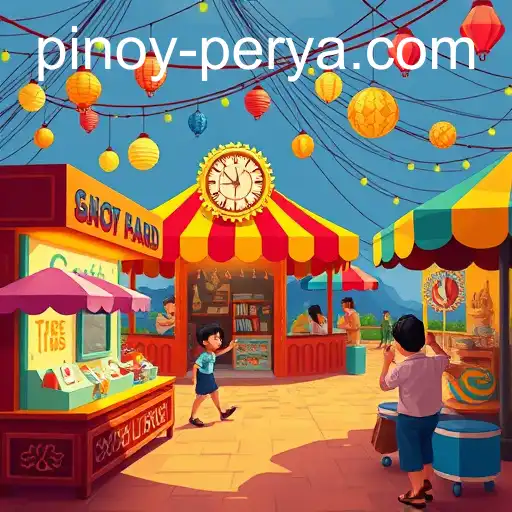
A fascinating keyword within this category is 'Pinoy Perya.' Originating from the heart of the Philippines, the term 'Pinoy Perya' refers to the traditional amusement fairs that are part of the Filipino culture. These fairs are vibrant events, filled with exciting activities, games, and rides, all imbued with a sense of community and cultural significance. In the context of educational games, 'Pinoy Perya' stands out as a keyword that bridges cultural heritage and modern educational methodologies.
Educational games using the 'Pinoy Perya' theme often incorporate traditional Filipino games and narratives, introducing players to cultural concepts while simultaneously promoting critical thinking, problem-solving, and adaptability. Such games provide an immersive experience where users can engage with the content, encouraging a deeper understanding of both the subject matter and the cultural nuances presented.
Typically, 'Pinoy Perya' educational games might include puzzles based on classic perya attractions, trivia related to Filipino folklore, or interactive simulations that mimic the negotiation and trade skills often found in these fairs. By incorporating these elements, developers aim to foster a connection to cultural heritage, promote cultural literacy, and provide an enjoyable pathway to learning.
Moreover, the educational aspect of these games is not limited to cultural education alone. Many games integrate broader subjects such as mathematics, language skills, and scientific concepts, all presented in a manner that resonates with the lively and colorful spirit of a perya. This unique fusion ensures that while players are engrossed in the game, they are also acquiring valuable knowledge and skills.
As technology continues to advance, the potential for educational games like those based on 'Pinoy Perya' only grows. Developers have the opportunity to leverage new technologies, such as virtual reality and augmented reality, to create more immersive and engaging experiences that bring the spirit of the perya to life in educational settings around the world.
In conclusion, the integration of 'Pinoy Perya' in educational games not only highlights the rich cultural heritage of the Philippines but also exemplifies how traditional elements can be transformed into modern educational tools. As educators and developers continue to explore this synergy, the result is a rich tapestry of learning experiences that are as enlightening as they are entertaining.
